Hareruya Pros Blog
Standard
Lessons Learned at Magic Spotlight: Secrets in London – A Tournament Report

Piotr Glogowski
Hareruya Pros Blog
Standard
Piotr Glogowski
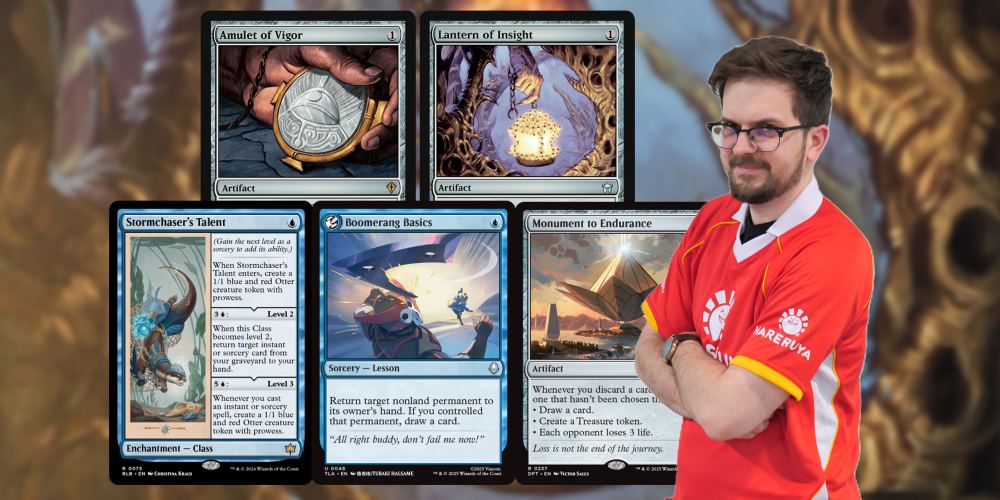
My stream sub notification might not make much sense to some of you. It’s a – devoid of context – clip of Simon Goertzen describing me as a “Phenomenal Control Player“. It happened early in my Magic career, during coverage of my first and only PT top 8 (Whew. Time flies!).
I was mostly unknown at the time, so Simon, recollecting my presence at some of the European Grand Prixes, and knowing me as the guy who always played and qualified for that PT playing Lantern Control, referred to me as a control player.
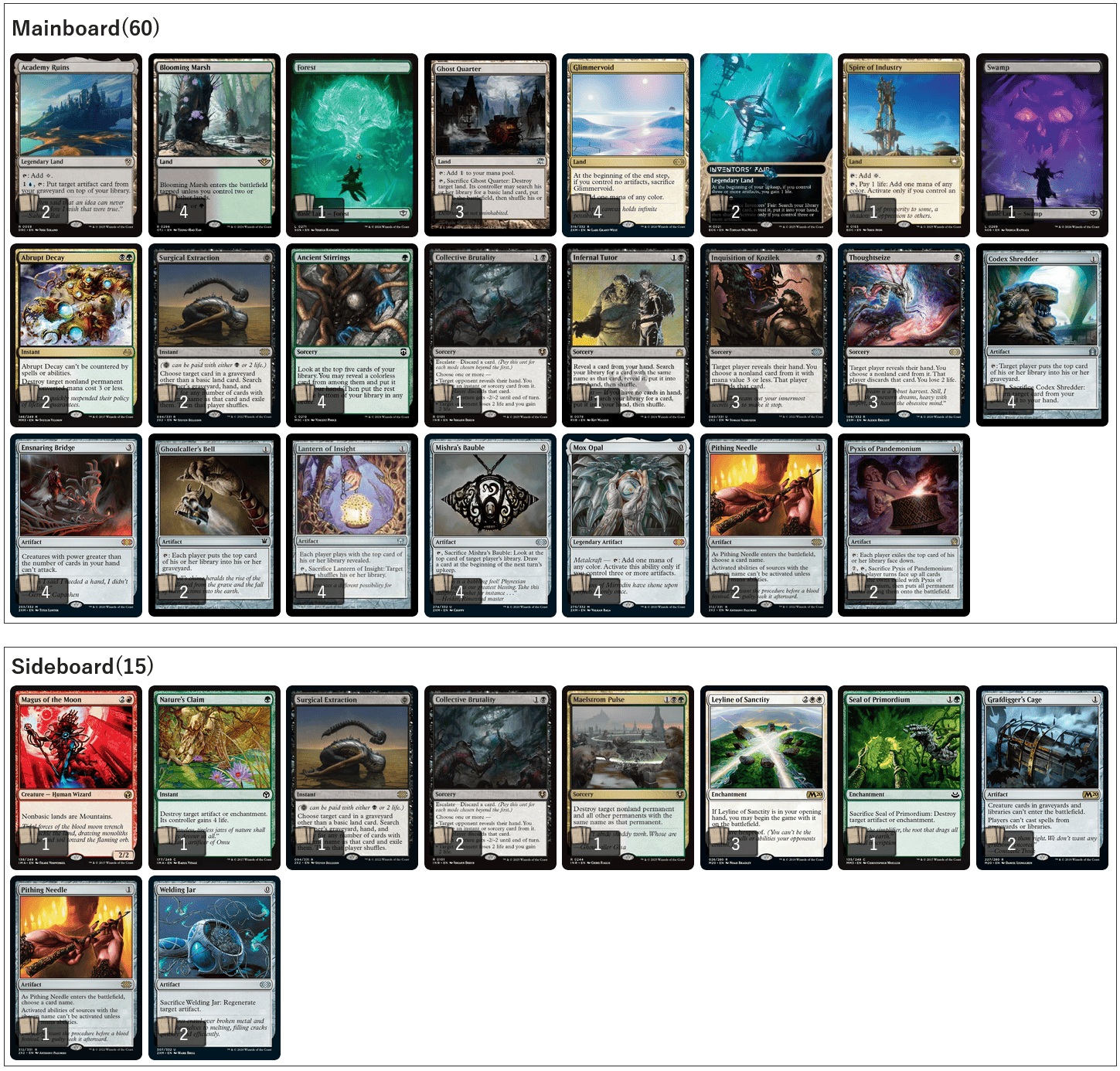
Lantern Control – Grand Prix Birmingham 2017 Top8
I set it as a sub notification in a slightly ironic way. Lantern was a control deck in name only. I actually seldom play true Control. Instead, my preference is – broadly – combo decks. Not every type of combo deck appeals to me, though. Storm-like decks don’t really scratch the itch for me in the same way – and I was wondering, why is that?
Ever since I started playing, given the choice between attacking and leaving my creature back to block, my natural intuition told me to leave it back – often just in case. I’ve gotten better about it throughout the years, but ideally, I’d prefer to defend myself and build an engine to go over the top of what my opponent is doing. I’m less comfortable in types of games where I need to meticulously trade with every single threat my opponent plays, or aggro games where sneaking every single point of damage early matters.
That natural propensity cost me a lot in Limited. In Sealed and Draft, missing free attacks is even more punishing, as combat is a much more focal point of that format, and you can’t guarantee that your late-game plan will be stronger than your opponents.
In constructed, I chose to mostly play decks that can take a little bit of a beating when setting up, only to strike back and win once I’m ready.
After careful introspection, I realized that what I want out of my deck is a powerful endgame. Those are the strategies I like and where my strengths as a player lie.
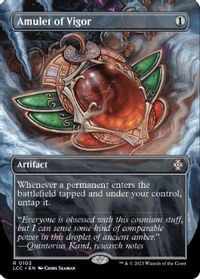
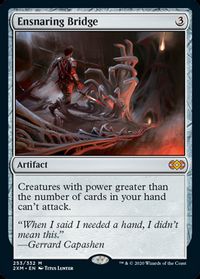
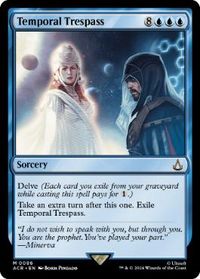
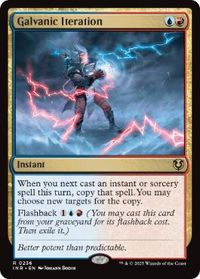
Examples include Amulet – a deck all about ramping, surviving, and setting up. Lantern Control was about untangling your opponent’s game plan with discard spells and the 《Lantern of Insight》 lock to lock them out of the game with 《Ensnaring Bridge》. But it also shapes how I prefer to build my decks. For example, I always built my Pioneer 《Arclight Phoenix》 decks to include 《Temporal Trespass》 + 《Galvanic Iteration》 combo.
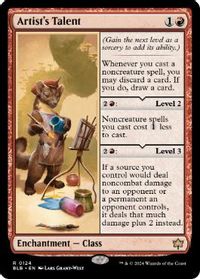
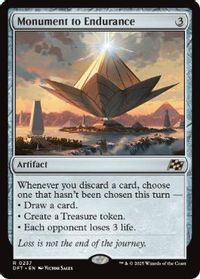
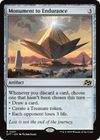
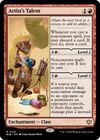
This resonates with how I play Lessons in Standard. The gameplay appeals to me – brace myself and interact for the first few turns of the game, fall behind a little bit while setting up my 《Artist’s Talent》 and 《Monument to Endurance》, and eventually win over a couple of turns by unleashing an unstoppable Storm-like finish on my opponent.
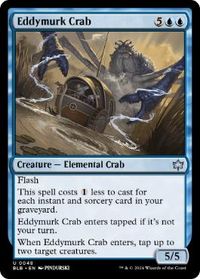
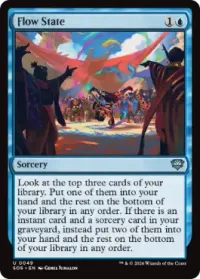
On the other hand, I had absolutely no interest in the Lessons builds, eschewing that package to play 《Eddymurk Crab》 and 《Flow State》 instead. At this point, we would be playing a slightly larger Prowess deck with less ability to pressure and more weakness to 《Rest in Peace》.
Deckbuilding and gameplay preferences are often viewed as a failure of the player. There’s always supposed to be a deck choice, sideboard plan, and gameplay choice that gives you the highest expected win percentage. Holding onto your preferred playstyle is seen as a limitation, preventing you from achieving your true potential as a Magic player.
At the same time, we idealize the ability to bluff and outplay our opponents. We cherish the ability for a player to be so in tune with their strategy that they’ve seen it all before and know exactly what to do at all times.
We do, however, live in the real world. Our time on this Earth is ultimately limited. The time we can spend learning and mastering this hobby – even more so. If you aren’t one of the most naturally talented players on the planet, ultimately, choosing to play into your strengths is a viable path.
Even when testing for Pro Tours with a larger team, it’s impossible to leave every stone unturned and experience everything. Eventually, you will end up submitting a single deck, and you’ll have to make all your lays yourself.

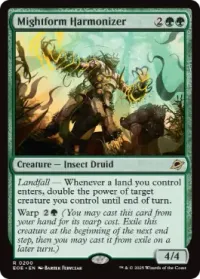
For Spotlight London, I only began my (brief) testing process upon seeing the results of the Pro Tour Secrets of Strixhaven. Green-White Landfall dominated the tournament, while Izzet decks overall underperformed slightly.
《Badgermole Cub》 decks seemed like a strong response to the direction the metagame could take. I spent two evenings trying to come up with a build of Cub that made sense to me, but I wasn’t satisfied. 《Quantum Riddler》 builds were hard to build and come up with a manabase for.
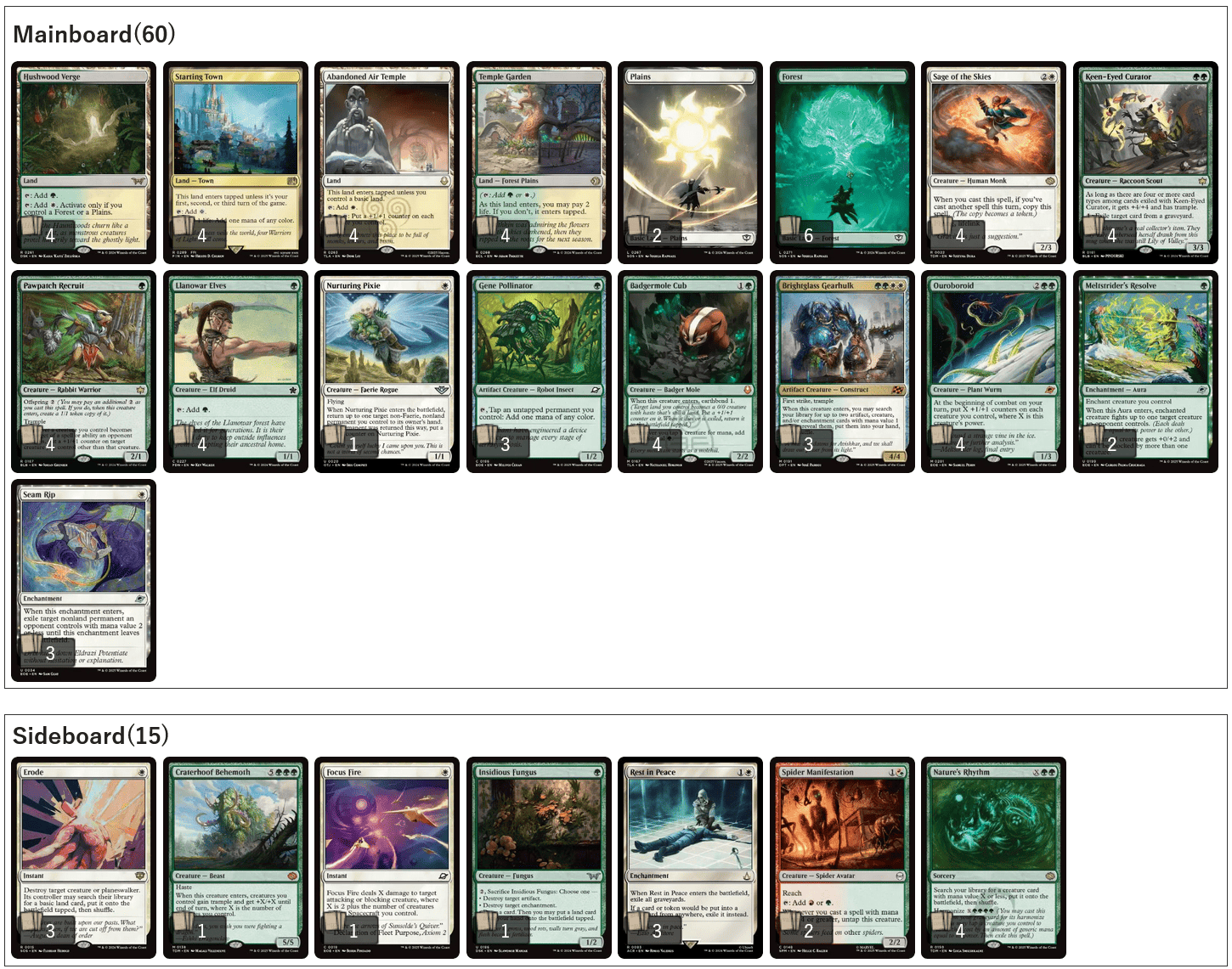
Selesnya Ouroboroid by Matt Nass – Pro Tour Secrets of Strixhaven Top4
The Green-White build Matt Nass top 8’d the Pro Tour with seemed cohesive – but it’s much more of an aggro deck focused on going wide. Once it got to parity, it didn’t topdeck well, and I didn’t love the idea of relying on 《Ouroboroid》 in a meta where the Landfall decks maindeck 《Erode》.
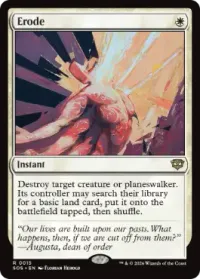
Soon, inspired by Rui Zhang’s and Daniel Goetschel’s performances, I circled back to Lessons. Sideboards at the Pro Tour were very disrespectful of Lesson, with no way of destroying a 《Monument to Endurance》 in sight. Dodging 《Erode》 almost entirely was also very enticing.
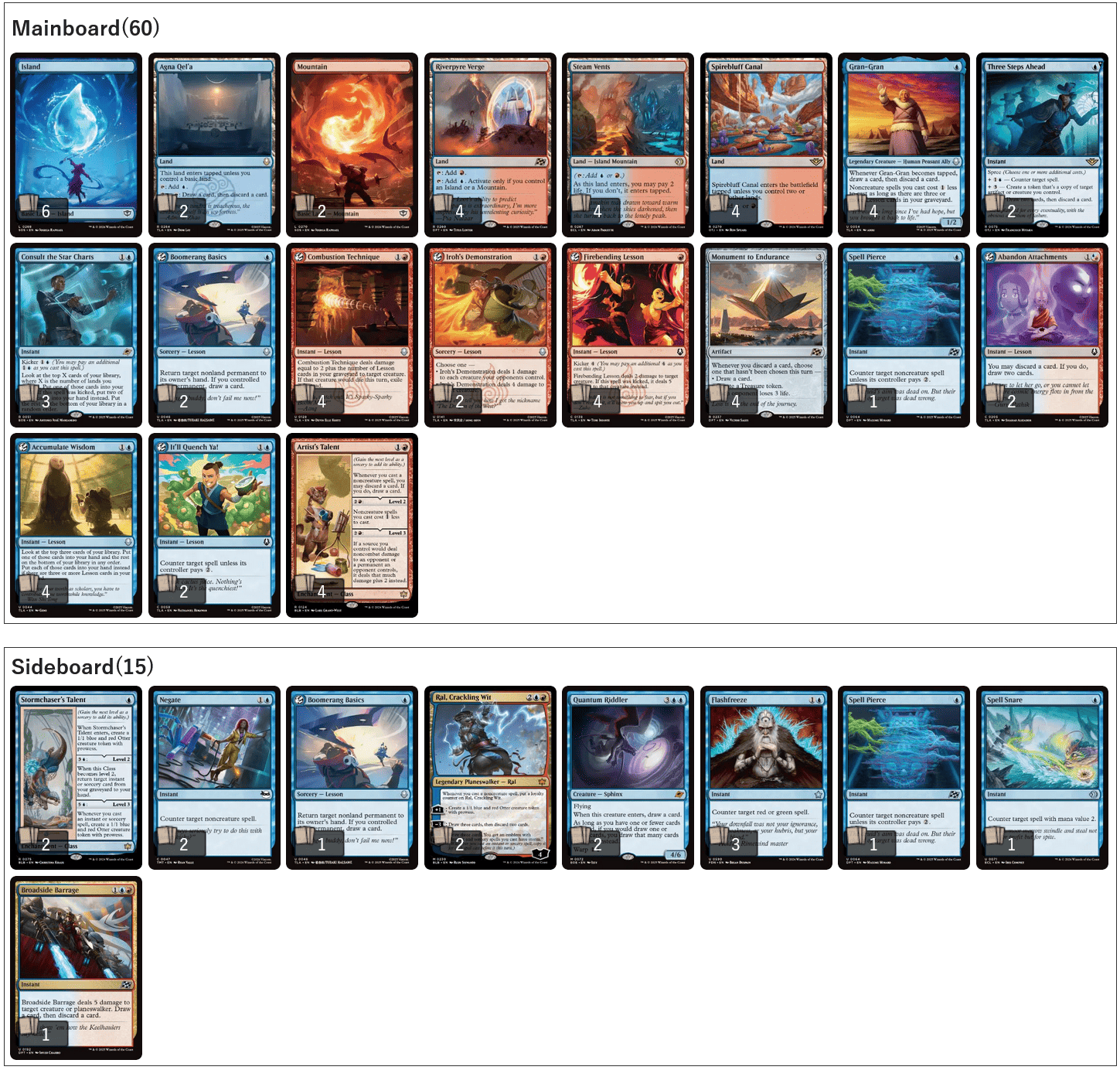
Izzet Lessons by Rui Zhang – Pro Tour Secrets of Strixhaven 3rd Place
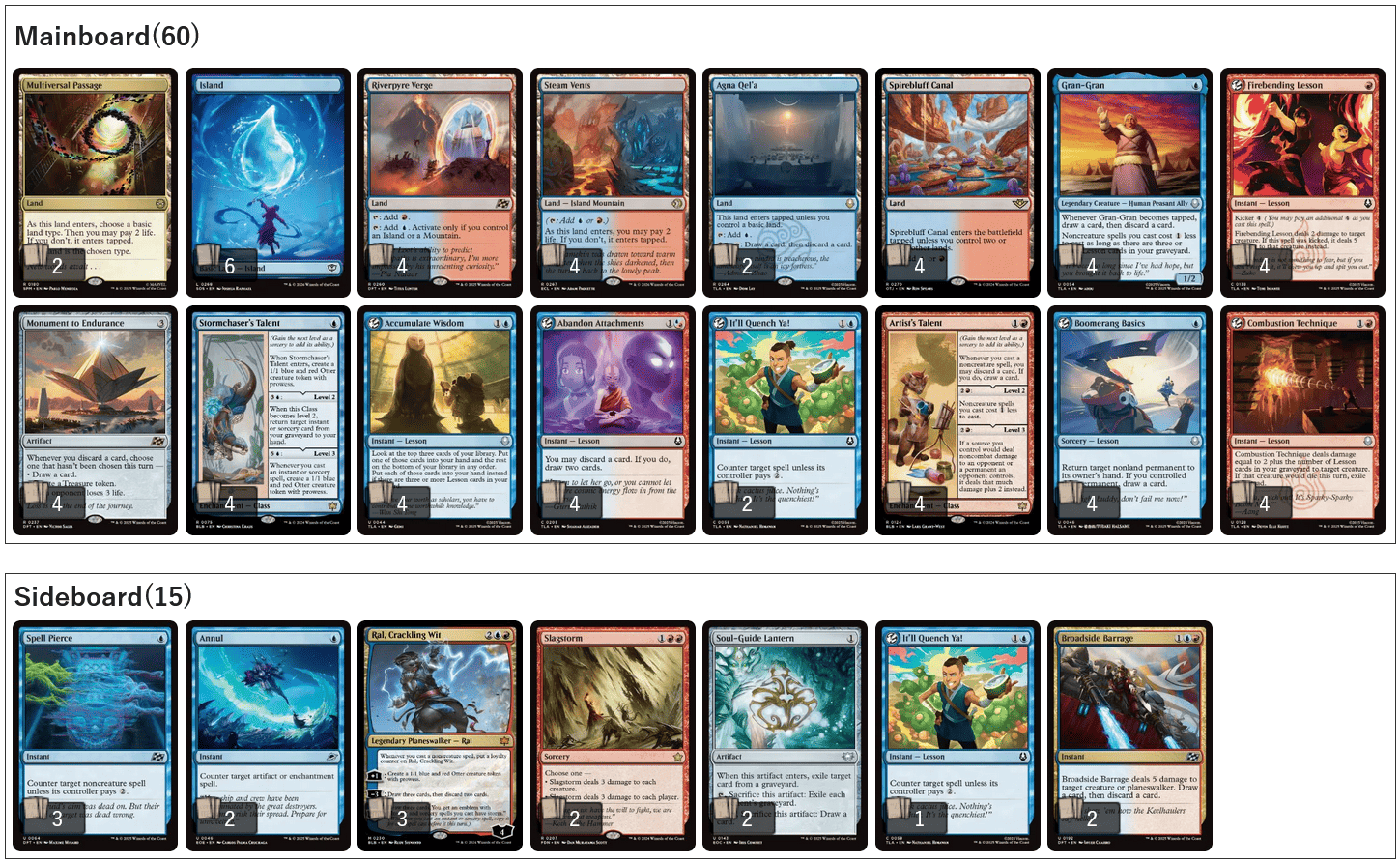
Izzet Lessons by Daniel Goetschel – Pro Tour Secrets of Strixhaven 8-2
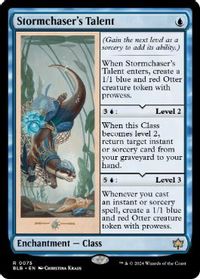
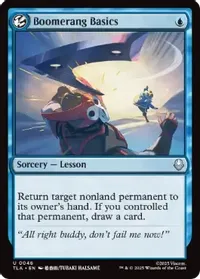
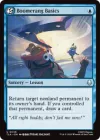
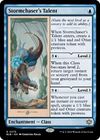
I pondered the upsides of the more traditional, 《Stormchaser’s Talent》/《Boomerang Basics》 approach of Daniel’s decklist against Rui’s build, eschewing those cards for more lategame-focused tools in 《Flashback》, 《Consult the Star Charts》, and 《Three Steps Ahead》. Having tried out all of those, I remained unconvinced.
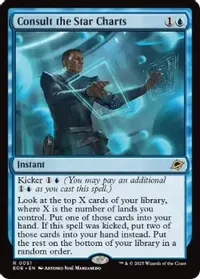
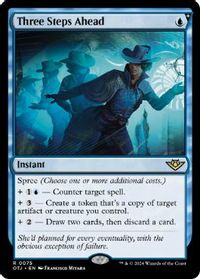
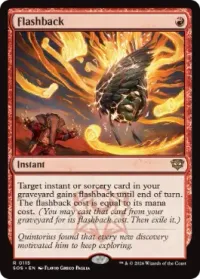
While all of those cards had their moments, I had trouble finding spots to resolve 《Consult the Star Charts》 comfortably.
《Three Steps Ahead》 is just not a priority in a format where many decks don’t play any expensive cards.
《Flashback》 felt especially offensive. I understood the allure of replaying your 《Accumulate Wisdom》 to draw even more cards, but when I was struggling to get to three Lessons in my graveyard, 《Flashback》 was not a Lesson itself, as well as costing me a Lesson from the graveyard. That’s clearly too much downside for a card that’s not obviously powerful and situational.
The breakthrough came when the Polish crew heading to London – me, Xerk, and TSPJendrek – sat down to discuss our decklist and sideboarding. Xerk was considering abandoning his comfort choice of Landfall to join Jendrek and me in playing Lessons with little experience on the deck.
He asked us to go through some opening hands. As we were discussing keeps and mulligans, it struck me how often 《Consult the Star Charts》 and 《Three Steps Ahead》 made our opening hands bad. Jendrek and I disagreed about the keepability of some of those. Xerk got scared off the deck, seeing how he could not rely on us providing him with clear guidelines.
I remembered the beauty of hands where I drew 《Stormchaser’s Talent》 and 《Boomerang Basics》 in my opening seven, messaged Daniel and talked about his build a bit more, and locked in 71 of 75 I ran in Regional Championship Turin two months before.
The insight to take from this situation is that while some choices might make sense for other players, eventually you’ll be the one playing the deck.
Even if 《Consult the Star Charts》 and 《Three Steps Ahead》 made sense as a metagame choice, and might suit a player making different mulliganing, sideboard, and gameplay decisions, if the card underperforms for you every time you draw it, there’s little reason to believe that it will be different at the tournament.
《Boomerang Basics》 and 《Stormchaser’s Talent》 are the more powerful, cohesive, and cheaper cards that make the deck tick and keep your Lessons count high, and I was really happy with those cards.
The four sideboard cards I introduced were:
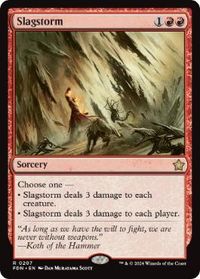
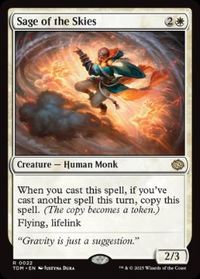
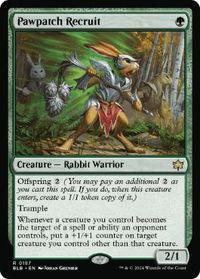
– A second 《Slagstorm》: An important tool to handle 《Sage of the Skies》 and 《Pawpatch Recruit》.
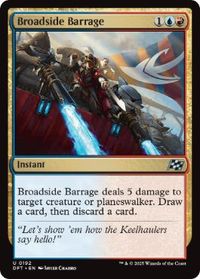
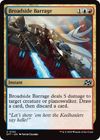
– 《Broadside Barrage》: Mostly to address the widespread popularity of 《Eddymurk Crab》.
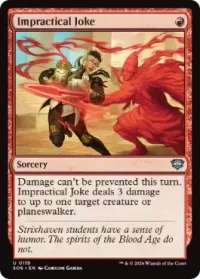
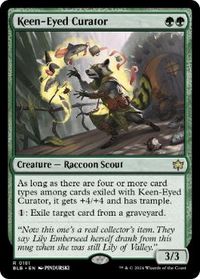
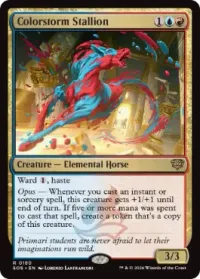
– 《Impractical Joke》: A simple removal spell that matches up well against 《Keen-Eyed Curator》 and 《Colorstorm Stallion》. More one-mana removal was valuable on the draw as well.
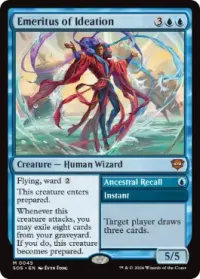
– 《Emeritus of Ideation》: A shiny, new threat for the grindy matchups. That space was previously occupied by the somewhat unexciting 《Quantum Riddler》. I tried running the second 《Emeritus of Ideation》, but as a five-drop, it already got stuck in my hand too often.
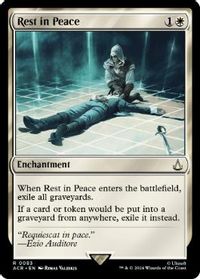
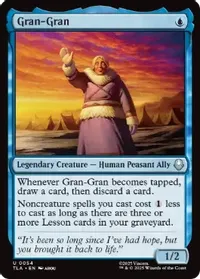
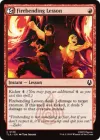
With my decklist ready, I sketched my sideboard plans and went to sleep. The plans are mostly uncontroversial. The hardest cut to make was 《Gran-Gran》 in creature matchups, but between 《Rest in Peace》, plentiful blockers, and my own 《Slagstorm》, it’s hard to rely on 《Gran-Gran》.
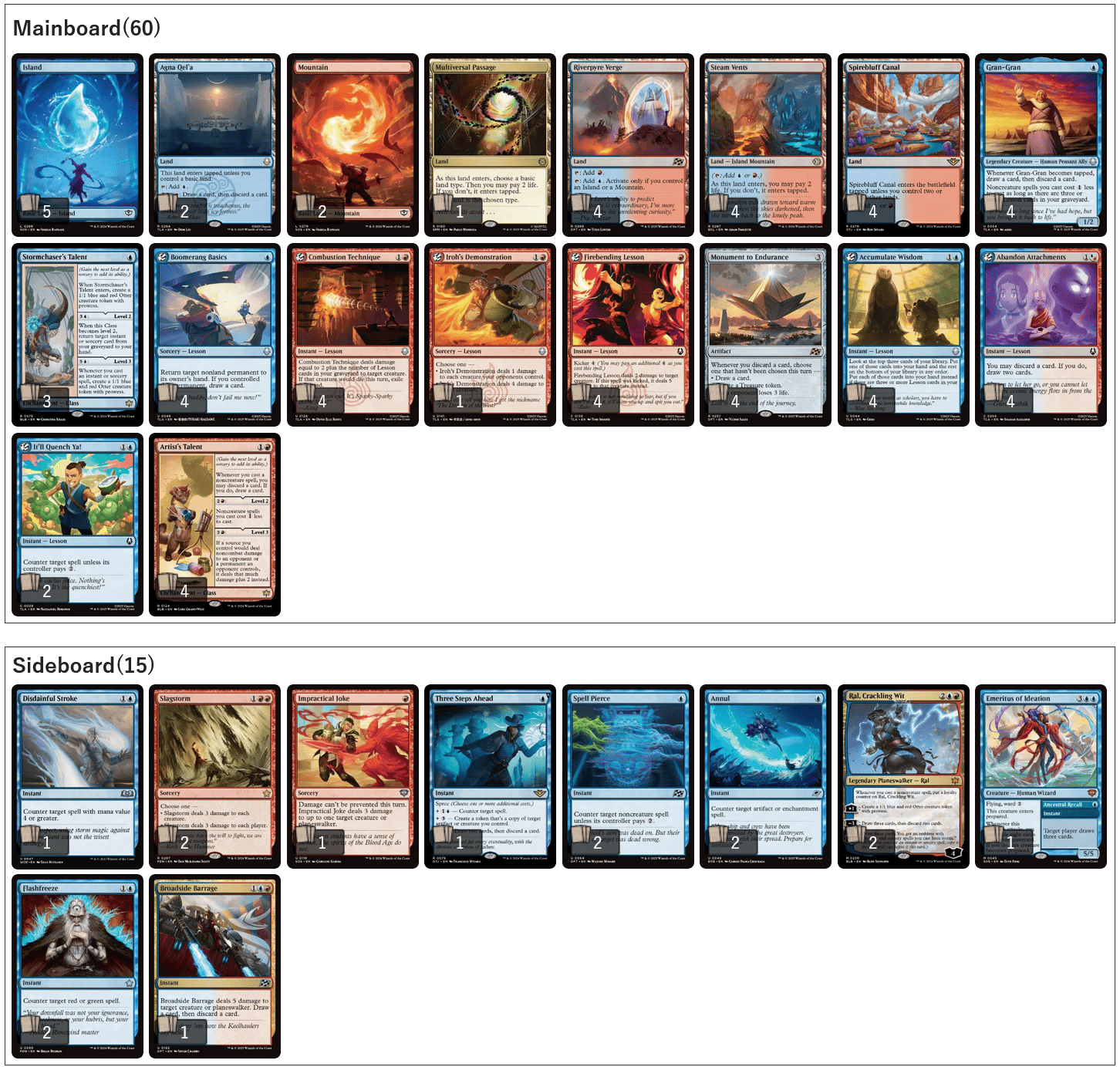
Izzet Lessons by Piotr Glogowski – Magic Spotlight: Secrets in London
You can also find the sideboard map here.

Out
In
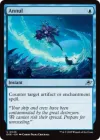

Out
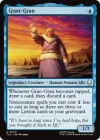
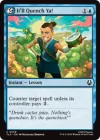
In
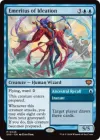
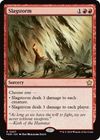
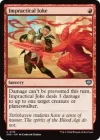
Out
In
Out
In
Out
In
Out
In
Out
In
Out
In
Out
In
Out
In
Over the next two days, I played 15 rounds of Magic, including an especially grueling 9-round Day One.
I have faced Prowess a total of six times and went 5-1 in the matchup. On Saturday, I kept boarding in my 《Emeritus of Ideation》 in that matchup. As time went on, I became more convinced that there was no good reason to move away from the 《Monument to Endurance》 win condition, and I kept the five-drop in my sideboard.
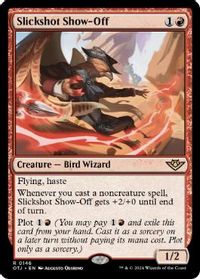
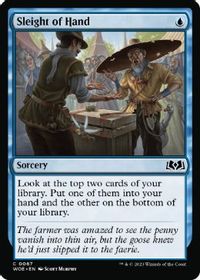
Games I lost, I simply got overrun by an early 《Stormchaser’s Talent》 and 《Boomerang Basics》 spam or too many 《Slickshot Show-Off》. On the other hand, I won all the games where my opponents opened with a turn-one 《Sleight of Hand》.
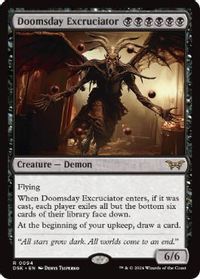
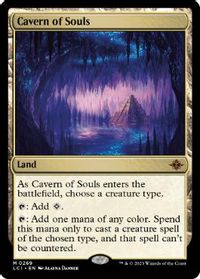
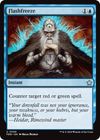
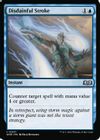
The second non-unique archetype I faced was – of all things – Dimir Excruciator. That matchup always feels very favorable, but their adoption of 《Cavern of Souls》 made countermagic very unreliable against that deck. It’s not all that clear to me that 《Disdainful Stroke》 is that much better in the matchup than a 《Combustion Technique》.
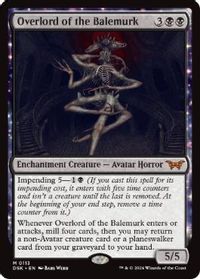
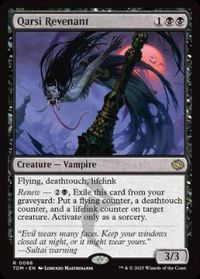
Luckily for me, one of my opponents played a creature-heavy version of 《Doomsday Excruciator》 with 《Overlord of the Balemurk》 and sideboarded 《Qarsi Revenant》, which made keeping 《Combustion Technique》 a simple and rewarding choice.
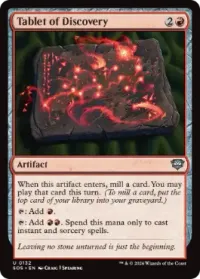
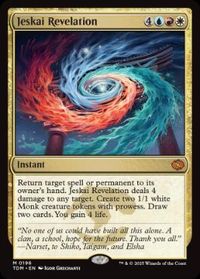
Round 6, I fought against 《Tablet of Discovery》 Jeskai Control. In game one, I ran out my 《Monument to Endurance》 too early into open mana and got it countered. Spent the rest of the game trying to set up a big turn where I could resolve one or two of the remaining 《Monument to Endurance》, but I spent a lot of time digging towards them.
Eventually, after a very long game involving fizzling a 《Jeskai Revelation》 by killing both targets with my own removal spells, I managed to stick one and deal the last three damage with the 《Artist’s Talent》 trigger, drawing my very last card in the deck. Close one!
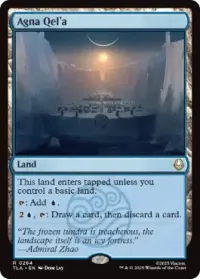
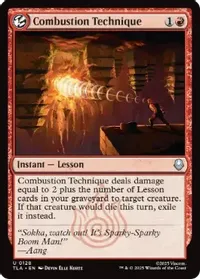
In round 5, I played my only mirror. Unfortunately, closed decklists got me here. I was on the play and attacked with a 《Gran-Gran》. Having only seen a 《Spirebluff Canal》 and a 《Stormchaser’s Talent》 on my opponent’s side of the battlefield, I’ve assumed my opponent is most likely on Prowess and discarded an 《Agna Qel’a》 instead of a 《Combustion Technique》.
That decision came to bite me seven turns later when I flooded out and was left unable to trigger my 《Monument to Endurance》 for the last few points of damage. Brutal!
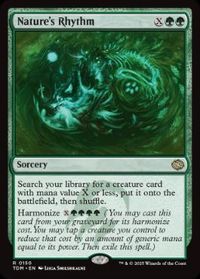
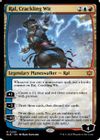
In round 7, I’ve faced a fellow fan of Amulet Titan – Nathan Goldberg – on Selesnya Rhythm. We’ve played some tight and close games. I was able to turn around a very long game on one life with the help of a 《Ral, Crackling Wit》‘s ultimate, but eventually succumbed and got run over after mulliganing to four.
While mulliganing so low could be blamed on bad luck, the postboard configuration is significantly clunkier. This was the opening seven I decided to ship back:
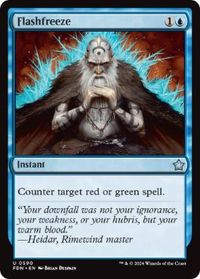
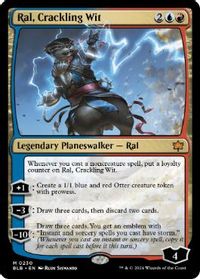
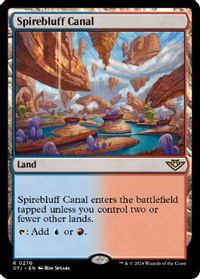
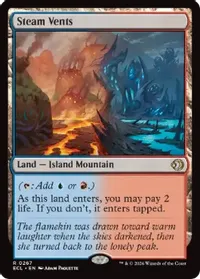
Perhaps a keepable hand if 《Broadside Barrage》 was a cheaper removal spell – something to think about when constructing the sideboard in the future.
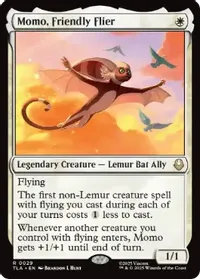
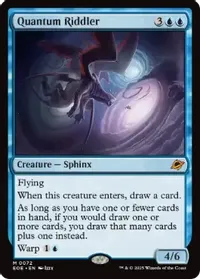
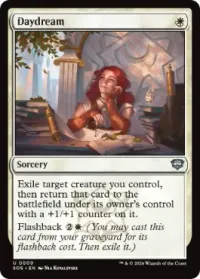
Round 15, I got paired against Koen de Vos – the eventual winner of the tournament. Azorious Momo featuring 《Quantum Riddler》 and 《Daydream》 was a matchup I had no experience in; my deck didn’t come together, and I got run over by 5/7 Riddlers in both games, losing my win and in and my chance to qualify for the Modern Pro Tour in Amsterdam. Maybe next time.
Of course, it’s hard not to get a little bit disappointed after coming so close to the finish line but ultimately falling short. Regardless of that, it was a great weekend. I’ve had tons of fun competing, and I believe I’ve made the correct deck choice – at least for myself.
Piotr Glogowski Before his first Pro Tour top 8, Piotr "kanister" Glogowski was already extremely famous as a streamer. He kicked off the 2017-2018 season with an impressive record at Pro Tour Ixalan (8th place), then reached the Finals with his great teammates at World Magic Cup 2017. His talent was flourished after all, and he finished that season as a Platinum Level Pro.