Column
Commander
What Is Disguised Dack? A Deep Dive into Japan’s cEDH Meta (16th God of Commander)

Hareruya Media Team
Column
Commander
Hareruya Media Team
(Disclaimer: This article was originally written in Japanese and translated into English using AI machine translation. While we strive for accuracy, some nuances or expressions may differ from the original text. Please refer to the [original Japanese version] for the most accurate information.)
If we haven’t met before, nice to meet you! And if it’s been a while, welcome back!
My name is Enzo.
I usually play casually with a cEDH community called “Rog-Tevesh Summit.”
Once again, I’ll be writing this ongoing analysis series for the God of Challenger Tournament. Thanks for reading, and I hope you enjoy it!
(The “God of Commander” Tournament is one of Japan’s premier cEDH tournament series, hosted by Hareruya.)
Great job to everyone who participated in the 16th God of Commander Challenger Tournament!
This event saw a record-breaking 175 players—an increase of over 20 participants from the previous tournament.
Could cEDH actually be gaining popularity…?! Huge thanks to everyone who showed up and played.
Let’s keep this momentum going and continue growing the scene!
Let’s start by catching up on how the metagame has evolved since the last event.

It has an ability similar to 《Ledger Shredder》, but what sets it apart is its remarkably lenient trigger condition: “whenever an opponent casts their first noncreature spell each turn.” Naturally, it triggers at an incomparably higher rate.

《Ledger Shredder》 has already proven how strong a looting ability is for continuously filtering hand quality, and generating 1/1 tokens on top of that is huge.


It synergizes exceptionally well with cEDH staples like 《Tymna the Weaver》, 《Derevi, Empyrial Tactician》, and 《Gaea’s Cradle》, so expect to see it become a regular powerhouse at tables moving forward.

An enchantment that creates a Treasure token on your second draw each turn—a mechanic Commander players are already very familiar with.
While it performs brilliantly against draw-heavy pods, there is a real concern about losing tempo by spending two mana to deploy it early without an immediate board impact. It doesn’t look like an auto-include that you can just blindly slot into every white deck.

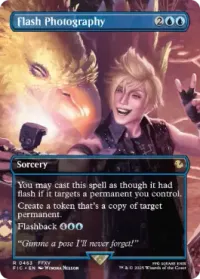


However, if you assemble 《Gleaming Splendor》 alongside two copies of 《Smothering Tithe》 (copied via cards like 《Flash Photography》, 《Copy Enchantment》, or 《Mirrormade》), you can—under the right conditions—generate infinite mana, draw your deck, and even mill out your opponents. Because of this, it has seen adoption as a win condition in Azorius-based control shells.

Essentially a white 《Displacer Kitten》.


Its usability differs significantly from the original since it only triggers on creature casts and cannot target itself, but being able to weave it into creature-spell chains gives it a unique niche all its own.
It is expected to shine in white-inclusive “Semi-Blue” lists (an archetype centered around 《Gaea’s Cradle》 and free creature-spell chains), most notably 《Helga, Skittish Seer》.

While already making waves in 1v1 constructed formats, he also ranks among the strongest planeswalkers from a multiplayer perspective.
In Commander, his static ability translates to drawing three cards per full turn cycle. His [+1] ability creating a blocker also earns high marks—a planeswalker that can protect itself is strong in any format. His [-2] is equally potent, able to interact with multiple problematic creatures or artifacts at once, or bounce high-power attackers to keep himself alive.

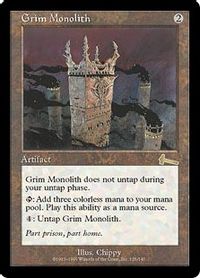


Landing him early to bounce mana rocks and mana dorks can create an overwhelming tempo and card-advantage gap. He also opens up unique multiplayer politics, letting you convince the table to spare your draw engine under the pretext of bouncing a mutual threat.


Overall, he is a very strong card, though the double-blue symbols in his cost are a noticeable drawback—especially since blue symbols eat into the mana you want to hold up for counterspells. That casting restriction may feel clunky in four- or five-color piles.

Another anti-interaction card?! Stop printing so many of these!!
I feel like I end up talking about anti-interaction effects every single time I write one of these articles…

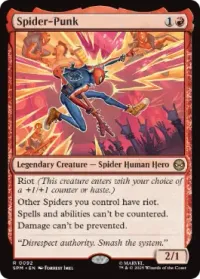
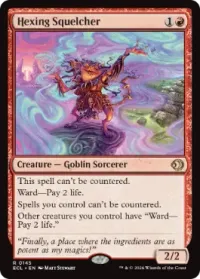

Making matters worse, it grants Split Second—an ability with virtually no counterplay.
That said, the catch is that it only grants Split Second to instants and sorceries. Even in cEDH, winning exclusively with instants and sorceries is quite difficult, making the card awkward in practice. So far, it hasn’t dominated the format quite as heavily as its pre-release hype suggested.

Wait—mono-green is just allowed to tutor for enchantments now?!
Green has finally received its long-awaited enchantment tutor.

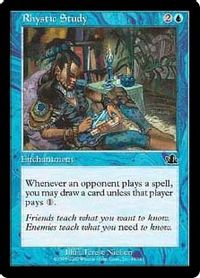

Its primary home looks to be green creature decks tutoring up 《Food Chain》—and being able to immediately exile 《Pia, Aether Ascetic》 to 《Food Chain》 for four mana is a nice bonus. It could also see play in Simic and other color combinations lacking enchantment tutors as a way to find 《Rhystic Study》 or 《Mystic Remora》.
Now, I’ve covered several cards up to this point, but there is one more card I have to talk about this time.
A “White Devil” has emerged from the Echoverse.

At first glance, the card reads like a “fun” yet suspiciously janky effect—handing your own creatures over to your opponents…
However, because it puts those creatures onto the battlefield before giving control of them to your opponents, all of their enters-the-battlefield (ETB) triggered abilities are controlled and resolved by the controller of 《Dack Fayden, Helping Hand》.
In other words, you get to freely abuse the ETB triggers of three creatures of your choice.
And in Magic: The Gathering, if you can freely combine the ETB abilities of three creatures, you can pull off just about anything. Naturally, players immediately figured out how to win on the spot. The ingenuity of humankind knows no bounds.
Put simply, what this means is…
・Once 《Dack Fayden, Helping Hand》’s ETB trigger resolves, the game is essentially over.
・《Dack Fayden, Helping Hand》 wins.
“In mono-white?!” you might ask—yet by drawing from the massive pool of creatures across Magic’s history, players have already pioneered two distinct combo routes with completely different win conditions.
This is likely yet another testament to how much creature card quality has crept up in recent years.
The deck primarily splits into two archetypes: the “Solar” build and the “Giant” build.

This version leverages creatures with temporary exile (“flicker”) abilities to stack triggers while 《Radiant Solar》 is on the battlefield, setting up a loop where creatures repeatedly enter and leave play.


By resolving 《Radiant Solar》’s triggered ability infinitely, you venture into the dungeon infinite times to close out the game.

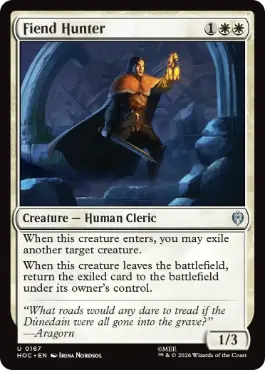


The deck runs a curated package of roughly 6 to 7 creatures—including staples like these—carefully selected so that whichever three get revealed, you can assemble a deterministic win.


In contrast, the Giant build utilizes 《Preston, the Vanisher》 and 《Roaming Throne》 to assemble an unstoppable 《Boonweaver Giant》 suited up with 《Eldrazi Conscription》, 《Super State》, and 《Idolized》, eliminating all three opponents with lethal combat damage in a single combat step.


Skipping the granular line-by-line details, along the way to resolving the combo, you don’t just create the “ultimate Giant”—you also generate lightning rods for removal, such as 《Boonweaver Giant》 enchanted with 《Consulate Crackdown》 and Giant tokens equipped/enchanted with 《Coalition Flag》.
As a result, disrupting the combo demands a steep tax in interaction: either three targeted removal spells, or two removal spells plus paying Ward 2.
To ensure consistency, the deck’s creature suite is trimmed down strictly to just three cards: 《Boonweaver Giant》, 《Preston, the Vanisher》, and 《Roaming Throne》.
Here is a rough breakdown comparing the pros and cons of each version:
| 《Radiant Solar》 Build | 《Boonweaver Giant》 Build | |
|---|---|---|
| Removal Resilience | Dependent on which creatures are revealed; sometimes none | Demands multiple pieces of removal |
| Combo Slots | 6–7 cards | ~12 cards |
| Combo Difficulty | Relatively complex | Straightforward |
| Draw/Brick Resilience | Can tolerate drawing 1 combo piece | Drawing any creature is rough |
| Winning in a 3-Player Pod | Reasonably doable | Very difficult |
Regardless of which build you choose, the overall deck construction follows a clean, straightforward shell:
Combo Pieces: 6–7 cards (Solar build) or ~12 cards (Giant build)
Lands:~30–33 cards
The remaining slots are filled out with mana acceleration, stax, and interaction:
Mana Acceleration: Primarily mana rocks (artifacts).
Stax: Effects that prevent opponents from casting counterspells.
Interaction: 《Silence》 effects and targeted removal.
Of course, there is plenty more we could dive into—such as “which specific creature pile is optimal for the Solar build…” or “how the Giant build can actually assemble infinite mana and infinite draw depending on your Aura package…”
However, if I keep going down this rabbit hole, this entire article will turn into a 《Dack Fayden, Helping Hand》 primer! To explore the deck in deeper detail, I highly recommend checking out the tournament reports and primers written by Ito—who placed with 《Dack》—as well as other members of his testing group.
Either way, the fundamental reality remains unchanged: once 《Dack Fayden, Helping Hand》 resolves, the game is over. What makes the deck truly terrifying is how aggressively it leverages fast mana to rush out its commander at breakneck speed while backing it up with stax pieces.
With a level of speed and resilience against countermagic that sets it apart from traditional decks, it is no exaggeration to say that this deck has dramatically reshaped the cEDH metagame.


Naturally, it puts pressure on other commanders whose game plan revolves around resolving their commander to win on the spot—such as 《Aang, at the Crossroads》, 《Gyruda, Doom of Depths》, and 《Etali, Primal Conqueror》.


Even commanders that resolve first and then take an additional action to win—like 《Godo, Bandit Warlord》, 《Narset, Enlightened Master》, or 《Rocco, Cabaretti Caterer》—find their value proposition shaken (notwithstanding differences in color identity or unique lines) when 《Dack Fayden, Helping Hand》 accomplishes the same end goal for just six mana.

| 16th | 15th | 14th | 13th | 12th | 11th | 10th※ | |
|---|---|---|---|---|---|---|---|
| Players | 14 | 10 | 12 | 14 | 13 | 11 | 1 |
| Play Rate | 8.00% | 6.49% | 7.06% | 9.09% | 8.55% | 6.92% | 0.71% |
| Record | 29-41-11 | 26-30-2 | 17-44-2 | 29-46-7 | 27-48-3 | 22-40-2 | (3-2-1) |
| Win Rate | 35.80% | 44.83% | 26.98% | 35.37% | 34.62% | 34.38% | 50.00% |
The reigning king of the format, Tymna/Kraum (“Blue Farm”), posted a strong win rate once again, even if slightly lower than last time.


Notably, many lists adapted to 《Dack Fayden, Helping Hand》 and the overall speedup of the format by leaning heavier into free interaction like 《Snuff Out》 and 《Submerge》, alongside 《Necropotence》 packages.
It’s a textbook showcase of the deck’s greatest strength: its flexibility to reshape itself to fit a fluid metagame.

| 16th | 15th | 14th | 13th | 12th | 11th | 10th | |
|---|---|---|---|---|---|---|---|
| Players | 11 | 8 | 5 | 5 | 5 | 4 | 3 |
| Play Rate | 6.29% | 5.19% | 2.94% | 3.25% | 3.29% | 2.52% | 2.14% |
| Record | 16-42-2 | 13-30-4 | 9-18-2 | 13-13-2 | 6-17-1 | 10-12-2 | 8-9-1 |
| Win Rate | 26.67% | 27.66% | 31.03% | 48.15% | 25.00% | 41.67% | 44.44% |
Remaining consistently popular, Tivit may not boast the sky-high win rates it once did, but it continues to be one of the most reliable commanders in the format.
Its straightforward game plan makes it approachable even for cEDH newcomers, which likely contributes to its enduring popularity (though, of course, Tivit becomes exponentially scarier in the hands of a seasoned pilot!).
Because the raw numbers also include “Disguised Dack” lists—which I’ll touch on later—it’s hard to say whether true Tivit representation actually went up this time around.

| 16th | 15th | 14th | 13th | 12th | 11th | 10th | |
|---|---|---|---|---|---|---|---|
| Players | 8 | 8 | 7 | 4 | 8 | 6 | 8 |
| Play Rate | 4.57% | 5.19% | 4.12% | 2.60% | 5.26% | 3.77% | 5.71% |
| Record | 11-32-2 | 16-29-2 | 9-32-1 | 5-15-3 | 11-33-2 | 8-24-2 | 10-26-10 |
| Win Rate | 24.44% | 34.04% | 21.43% | 21.74% | 23.91% | 23.53% | 21.74% |
As I mentioned in a previous article, Tymna/Thrasios has been popping up regularly again ever since new deckbuilding approaches emerged.

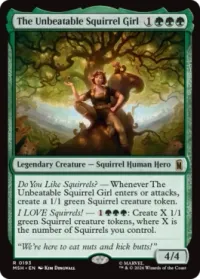
Sato’s Top 12 list from this tournament featured some fascinating personal tech—most notably cutting 《Emiel the Blessed》 in favor of 《The Unbeatable Squirrel Girl》.
Thanks to its four-color identity, this shell also has tremendous capacity to adapt to the metagame, leaving plenty of room for exploration.
In a post-《Dack Fayden, Helping Hand》 metagame, it might be worth re-evaluating faster, turbo-oriented builds of the pair.
| 16th | 15th | 14th | 13th | 12th | 11th | 10th | |
|---|---|---|---|---|---|---|---|
| Players | 8 | – | – | – | – | – | – |
| Play Rate | 4.57% | – | – | – | – | – | – |
| Record | 11-33-1 | – | – | – | – | – | – |
| Win Rate | 24.44% | – | – | – | – | – | – |
The undeniable star of the tournament, 《Dack Fayden, Helping Hand》, recorded roughly a 25% win rate.
The deck actually carries a structural flaw: if you get paired into a 3-player pod, you can only put two creatures onto the battlefield instead of three. Putting up around a 25% win rate despite that handicap—and with the entire room gunning for it—speaks volumes about the deck’s sheer raw power.
Since everyone is naturally wondering how the Solar and Giant builds performed individually, I broke down their separate win rates as well.
| 《Radiant Solar》 Build | 《Boonweaver Giant》 Build | |
|---|---|---|
| Players | 3 | 5 |
| Record | 2-12-1 | 9-21-0 |
| Win Rate | 13.33% | 30.00% |
This time around, the Giant build—which also converted into the Top 12—came out on top.
With the field anticipating the Solar build—loading up on extra removal and aggressively mulliganing for it—the meta tilted heavily in favor of the lesser-known, removal-resilient Giant variant.

That said, because smaller local tournaments and store events have a much higher chance of firing 3-player pods—and because the deck suffers non-zero bricking issues from drawing its creatures naturally or having them exiled off 《Ragavan, Nimble Pilferer》—it’s far from guaranteed that the Giant build will remain the superior choice going forward.


| 16th | 15th | 14th | 13th | 12th | 11th | 10th | |
|---|---|---|---|---|---|---|---|
| Players | 7 | 8 | 7 | 8 | 0 | 3 | 5 |
| Play Rate | 4.00% | 5.19% | 4.12% | 5.19% | 0.00% | 1.89% | 3.57% |
| Record | 7-30-3 | 14-29-2 | 12-26-1 | 9-33-2 | – | 6-11-0 | 10-18-1 |
| Win Rate | 17.50% | 31.11% | 30.77% | 20.45% | – | 35.29% | 34.48% |
Rog/Si saw a steep drop in win rate this time around.
One likely factor is that it caught stray fire from the heavy wave of hate cards and mulligan strategies aimed squarely at 《Dack Fayden, Helping Hand》.

| 16th | 15th | 14th | 13th | 12th | 11th | 10th | |
|---|---|---|---|---|---|---|---|
| Players | 7 | 7 | 13 | 4 | 4 | 6 | 9 |
| Play Rate | 4.00% | 4.55% | 7.65% | 2.60% | 2.63% | 3.77% | 6.43% |
| Record | 11-28-1 | 9-32-1 | 20-53-2 | 4-18-0 | 5-18-1 | 10-25-1 | 9-41-4 |
| Win Rate | 27.50% | 21.43% | 26.67% | 18.18% | 20.83% | 27.78% | 16.67% |
Although 《Kinnan, Bonder Prodigy》 naturally gets caught in the crossfire of the same disruption aimed at 《Dack Fayden, Helping Hand》, it still managed to put up a strong win rate.
Simic-based creature decks like this excel at letting the table spend resources to check 《Dack Fayden, Helping Hand》, and then slipping through to win in the second wave—which likely accounted for many of its victories.
《Kinnan, Bonder Prodigy》 boasts a wide variety of builds, including traditional Midrange Kinnan, “Semi-Blue” Kinnan (which I covered in a past article), 《Filigree Sages》 Kinnan, and the recently resurfacing 《Pili-Pala》 Kinnan. Every one of these variants picked up a respectable share of wins at this event, and I’m excited to see which tuning ultimately rises to the top.
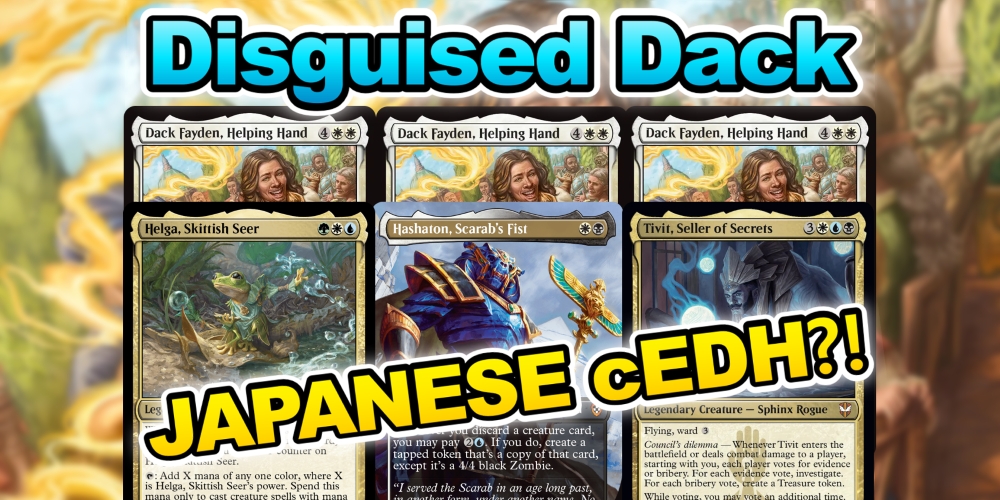
While only 8 players registered 《Dack Fayden, Helping Hand》 as their commander, there were 18 total copies of the card registered across the tournament. That means 10 players ran 《Dack Fayden, Helping Hand》 hidden inside the 99—an approach dubbed “Disguised Dack.”
| Commander | Players |
|---|---|
| 《Hashaton, Scarab’s Fist》 | 3 |
| 《Kenrith, the Returned King》 | 2 |
| 《Tivit, Seller of Secrets》 | 2 |
| 《Sisay, Weatherlight Captain》 | 1 |
| 《Helga, Skittish Seer》 | 1 |
| 《Mr. Foxglove》 | 1 |
By expanding beyond mono-white into additional colors, players are actively exploring alternative creature combinations to assemble lethal lines that aren’t possible with 《Dack Fayden, Helping Hand》 in the command zone.
Gaining access to a much wider suite of tutors and interaction is another major upside. At the time of this tournament, the element of surprise—being far less likely to draw immediate hate from the table—undoubtedly worked in its favor as well.
Once again, it’s time for Enzo’s Selection, where I spotlight decks that didn’t necessarily have massive meta share, yet put up standout performances!

Pilot Watanabe rode an undefeated 8-0 run all the way to the title of Commander God with a “Disguised Dack” build of 《Hashaton, Scarab’s Fist》.

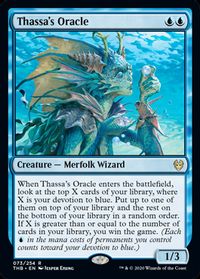
Because the deck includes blue in its color identity, creating a Zombie token copy of 《Dack Fayden, Helping Hand》 via 《Hashaton, Scarab’s Fist》 lets you pull both 《Thassa’s Oracle》 and 《Leveler》 straight out of your library at the same time for an instant win. Easy! So easy!!
《Hashaton, Scarab’s Fist》 is naturally built around cheating creatures into play, making it a seamless fit with 《Dack Fayden, Helping Hand》, and its Esper color identity pairs cleanly with black tutors and blue interaction.


On top of that, the classic trick of holding priority over a Split Second spell like 《Angel’s Grace》 or 《Extirpate》 and cracking 《Lion’s Eye Diamond》 (since it’s a mana ability) to activate 《Hashaton, Scarab’s Fist》 becomes a literal “finishing move” when the creature coming into play is 《Dack Fayden, Helping Hand》.


While international lists that put up results ran 《Yuriko, Blade of the Mighty》 still functions even after being handed over to an opponent—Watanabe opted for 《Grand Abolisher》 instead, prioritizing a card that plays much more smoothly if drawn naturally.
More recently, lists have even started cutting that third creature slot altogether so the combo can still cleanly win in 3-player pods.
Veteran competitor Suzawa—marking his third Top cut with 《Helga, Skittish Seer》 and fourth overall—brought a “Disguised Dack” take on 《Helga, Skittish Seer》.
What makes this list unique is that instead of trimming down the creature count to a tiny deterministic package, it simply slots 《Dack Fayden, Helping Hand》 in as one threat among a dense creature suite.
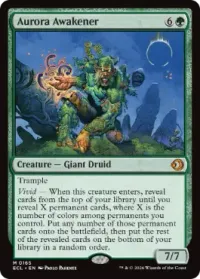
Capitalizing on 《Dack Fayden, Helping Hand》’s ability to freely trigger three creature ETBs at once, the deck uses it essentially as a second copy of 《Aurora Awakener》.
Resolving 《Dack Fayden, Helping Hand》 doesn’t guarantee a deterministic win on the spot, but the deck is tuned with enough clone effects that you have a very high probability of chaining through them into a win anyway.
It was a groundbreaking innovation—slotting 《Dack Fayden, Helping Hand》 in purely as a high-ceiling value piece without compromising Helga’s core game plan.
Top 12 finisher Takemura piloted a list crafted by renowned Rog/Tymna specialist Sumiyoshi.
When it comes to 《Rograkh, Son of Rohgahh》-based 《Ad Nauseam》 decks, Rograkh/Silas is the most popular pairing, but Rograkh/Tymna is quietly a powerhouse in its own right.
Compared to Rog/Si, the biggest advantages here are gaining access to white’s silence/anti-interaction suite and having 《Tymna the Weaver》 in the command zone as a reliable card-draw backup plan.

Conversely, its Achilles’ heel is a lack of resilience against opposing silence effects—without blue countermagic, there is virtually nothing you can do when an opponent fires off a 《Silence》.
However, in the current metagame—where decks are loading up on interaction to respect 《Dack Fayden, Helping Hand》 and games are stretching slightly longer—the rising premium on protective silence effects may actually put Rog/Tymna in a better position than ever.
The 16th season’s metagame was squarely defined by 《Dack Fayden, Helping Hand》 and the decks built to answer it.
With every single Top 12 finisher mentioning 《Dack Fayden, Helping Hand》 in their player profile, this truly was the “Autumn of White Dack.”
Yet, looking closely at those Top 12 lists reveals an important takeaway: the players who warped their decks excessively to hate out 《Dack Fayden, Helping Hand》 were not the ones making the Top cut.


While decks capable of generating effortless card advantage might get away with it, decks without built-in draw engines that compromise their structural balance—and even sacrifice tempo—just to cast narrow hate pieces like 《Grafdigger’s Cage》, 《Strix Serenade》, or 《Delay》 are simply going too far.
That said, blue-based midrange shells with card-advantage commanders in the command zone may still have room to slot in targeted hate pieces.


Now that word is out about builds of 《Dack Fayden, Helping Hand》 that shrug off targeted removal, expect to see cards that directly shut down or counter its enters-the-battlefield trigger—such as 《Doorkeeper Thrull》, 《Stifle》, and 《Dress Down》—rise to prominence.
This tournament also shattered attendance records, drawing a massive crowd of 175 players.
While that growth is fantastic news, it also marked the first time in God of Commander Challenger Tournament history that players with a 4-2 record missed the cut on tiebreakers—meaning future events might expand to seven Swiss rounds. (Personally, more rounds just means richer data to analyze, so I’m all for it!)
What did you think?
I hope this breakdown helps make your cEDH journey even more enjoyable!